Guide To Buying Your First Home In Point Breeze
Thinking about buying your first home in Point Breeze can feel exciting right up until you start asking the big questions. How competitive is the market? What kind of house are you really buying? And how do you avoid expensive surprises in an older South Philly rowhome? If you want a clear, local-minded path forward, this guide will help you understand the market, weigh your options, and prepare like a smart first-time buyer. Let’s dive in.
Point Breeze stands out because it gives you a more approachable entry point into South Philadelphia than several nearby neighborhoods. Realtor.com’s April 2026 data shows a median listing price of $349,900 in Point Breeze, while Graduate Hospital sits at $662,000, Bella Vista at $450,000, and Passyunk Square at $525,000. That price gap matters when you are trying to balance monthly payments, closing costs, and future repairs.
At the same time, Point Breeze is not a bargain-bin market where you can wing it and hope for the best. Realtor.com reports 189 homes for sale, 40 days on market, and homes selling for about 97% of list price. Redfin’s May 2026 numbers tell a similar story, with a median sale price of $322,891 and homes going pending in about 60 days.
The headline here is simple: Point Breeze looks balanced, not frantic. You may have room to think, inspect, and negotiate, but you still need to be prepared when the right home hits the market.
For a first-time buyer, a balanced market can be a real advantage. You are less likely to face the speed and pricing pressure you might see in faster, higher-priced nearby neighborhoods. That can give you more breathing room to compare homes, understand condition, and make decisions based on facts instead of panic.
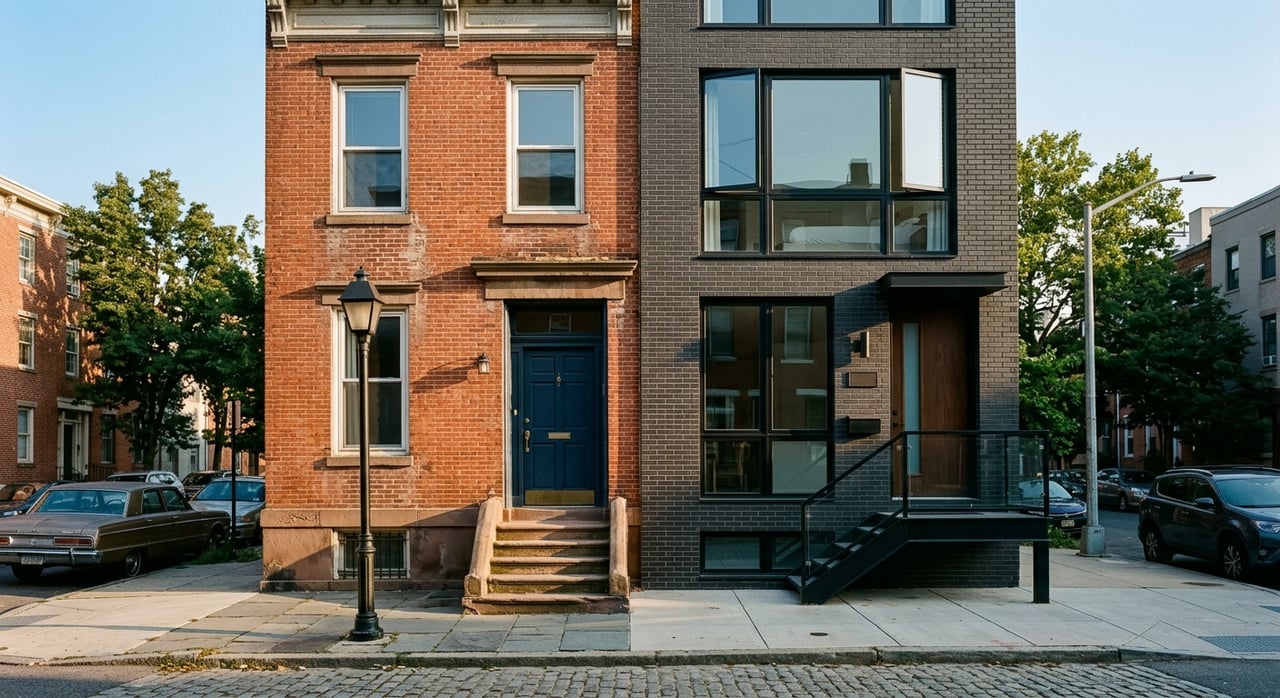
Point Breeze also gives you a wider range of housing choices than many buyers expect. In this neighborhood, you may tour older rowhomes, renovated resales, untouched properties, and newer infill homes in the same search. That variety can create opportunity, but it also means you need to compare homes carefully instead of assuming every listing offers the same long-term value.
If you are open to tradeoffs between price, finishes, and repair risk, Point Breeze can be a practical place to start. Buyers who come in with a plan often find it more manageable than nearby areas with higher price tags and tighter competition.
Point Breeze is, in large part, an older Philadelphia rowhouse market. According to the City of Philadelphia’s Rowhouse Manual, many rowhouses were built with minimal insulation, and roofs are often the most vulnerable part of the house. That means charm and location may come with maintenance realities you need to understand upfront.
Older rowhomes can also have issues that are not obvious during a quick showing. The city notes that foundation walls can crack or bulge, joists can rot where they sit in masonry pockets, and water intrusion can weaken structural connections. None of this means you should avoid older homes. It means you should evaluate them with open eyes and strong due diligence.
Newer infill homes can look appealing for obvious reasons, including newer systems and less immediate repair work. But even then, you still want a careful inspection and a clear understanding of construction quality, drainage, and finishes.
When you buy your first home here, inspection strategy matters just as much as offer strategy. In Point Breeze, you are often buying not just a layout and a location, but also the condition of an aging building envelope.
The City of Philadelphia identifies the roof as the most vulnerable part of the rowhouse. Ask about roof age, visible repairs, gutter condition, and downspouts. You also want to understand how stormwater is being managed, because poor drainage can lead to bigger issues over time.
Basements can tell you a lot about a house. Watch for moisture, signs of past water intrusion, settlement, and walls that appear bulged, tilted, or significantly cracked. In an older attached home, these details are worth slowing down for.
Shared walls are part of rowhome living, and they deserve careful review. The city specifically notes that party walls and joist pockets should get close attention. This is one area where an experienced inspector can help you understand whether a concern is cosmetic, routine, or more serious.
Many older Philadelphia rowhomes were built with minimal insulation. That can affect comfort in both summer and winter, as well as your monthly utility costs. A freshly renovated kitchen does not always tell you how the home will feel in January or August.
Radon is easy to overlook, but it should not be skipped. The Pennsylvania Department of Environmental Protection says radon can enter through foundation cracks and that testing is the only way to know whether levels are elevated. The agency also notes that about 40% of homes tested in Pennsylvania are above the EPA action guideline of 4 picocuries per liter.
The Philadelphia Water Department says residential customers are responsible from the main connection to the premises for the sewer line and the service and supply line. In practical terms, that means line condition can become your problem after closing. For some buyers, that makes additional due diligence around these lines worth discussing early.
Once you go under contract, timing becomes important. The CFPB recommends scheduling your home inspection as soon as possible after choosing the home and using an independent inspector. If you can attend the inspection, you may get a much better feel for the home than you would from the written report alone.
It also helps to understand that an inspection and an appraisal are not the same thing. An inspection looks at condition, while an appraisal helps the lender assess value. For a first-lien mortgage, lenders generally must send you a free copy of the appraisal, and you should usually receive it no later than three days before closing.
If the appraisal comes in low or identifies major repair issues that affect lending, your deal may need to be renegotiated. That could mean repairs, an escrow holdback, or more cash to close. Knowing that possibility ahead of time helps you stay calm if the process gets bumpy.
One of the best parts of buying in Philadelphia is that local support exists, but you need to follow the process carefully. The City of Philadelphia’s Philly First Home program offers up to $10,000 or 6% of the purchase price, whichever is lower, for down payment and closing costs.
There are a few key rules to know. Buyers must complete City-funded homeownership counseling before signing the agreement of sale, and the property must be a single-family home or duplex in Philadelphia. Condominiums are not eligible for this program.
PHFA is another important resource for Pennsylvania buyers. The agency recommends starting with a PHFA-approved counselor and a participating lender, and it also advises completing counseling before signing a sales agreement. PHFA offers purchase-assistance options, including possible help with down payment and closing costs.
If your FICO score is below 680, PHFA notes that you must complete an in-person course before closing. That is not a reason to panic. It is simply a reminder that buyer education is part of the process, and starting early gives you more options.
If you are still deciding where to focus your search, it helps to compare Point Breeze with nearby neighborhoods through a first-time-buyer lens.
| Neighborhood | Median Listing Price | Median Days on Market | What It Suggests |
|---|---|---|---|
| Point Breeze | $349,900 | 40 | Balanced entry point with room for planning |
| Newbold | $327,500 | 43 | Similar price range and pace |
| West Passyunk | $276,950 | 34 | Lower-cost nearby option |
| Bella Vista | $450,000 | 20 | Higher-priced and more competitive |
| Passyunk Square | $525,000 | 47 | Pricier with a slightly slower pace |
| Graduate Hospital | $662,000 | 25 | Much higher cost and faster-moving |
Point Breeze often lands in a sweet spot for buyers who want to stay in South Philly without stretching into some of the neighborhood’s pricier neighbors. It is not the cheapest option nearby, but it can offer a workable balance of price, location, and inventory.
If you are serious about buying your first home in Point Breeze, your best move is to treat preparation like part of the purchase.
Before you fall in love with a house, get clear on your budget, cash to close, and repair reserve. In an older rowhome market, it is wise to think beyond down payment and monthly mortgage costs.
If you may qualify for Philly First Home or PHFA support, start those conversations before you sign an agreement of sale. Waiting too long can limit your options or cause avoidable stress.
Be honest about your comfort level with repairs and updating. A renovated rowhome, a fixer, and a newer infill property may all fit your budget differently, but they can lead to very different ownership experiences.
Inspections, radon testing, and line-related questions are not side issues in Point Breeze. They are part of understanding what you are buying. A smart offer is not just competitive. It is informed.
Even in a balanced market, a house may need repairs, an appraisal may come in soft, or a report may raise new questions. When you expect some twists, you can make decisions with a clear head instead of feeling blindsided.
Buying your first home in Point Breeze is very doable, especially if you want a more accessible South Philly option without stepping into the highest price tiers nearby. The key is understanding that affordability and simplicity are not always the same thing. With the right strategy, good local guidance, and careful due diligence, you can buy with more confidence and fewer surprises.
If you want help thinking through neighborhoods, pricing, inspections, and your first offer strategy, The Liz Clark Real Estate Team is here to make the process feel clear, strategic, and human.
Stay up to date on the latest real estate trends.

Home Appraisals Explained for Philadelphia Buyers, Sellers, and Luxury Homeowners.

A Guide to Chestnut Hill Architecture, From Stone Colonials to Modern Landmarks.
How Home Age and Market Value Shape Philadelphia Real Estate Prices.

A Clear Guide to the Home Appraisal Process for Philadelphia Buyers and Sellers.

If you’re thinking about selling your home, obsessively scrolling for a house, planning a relocation to the area, or just feel unsure where to start, we can help. Reach out for a zero-pressure 30-minute phone or video meeting to get started. We are here to listen, support, and educate so you can feel confident with your decisions in our swiftly moving market