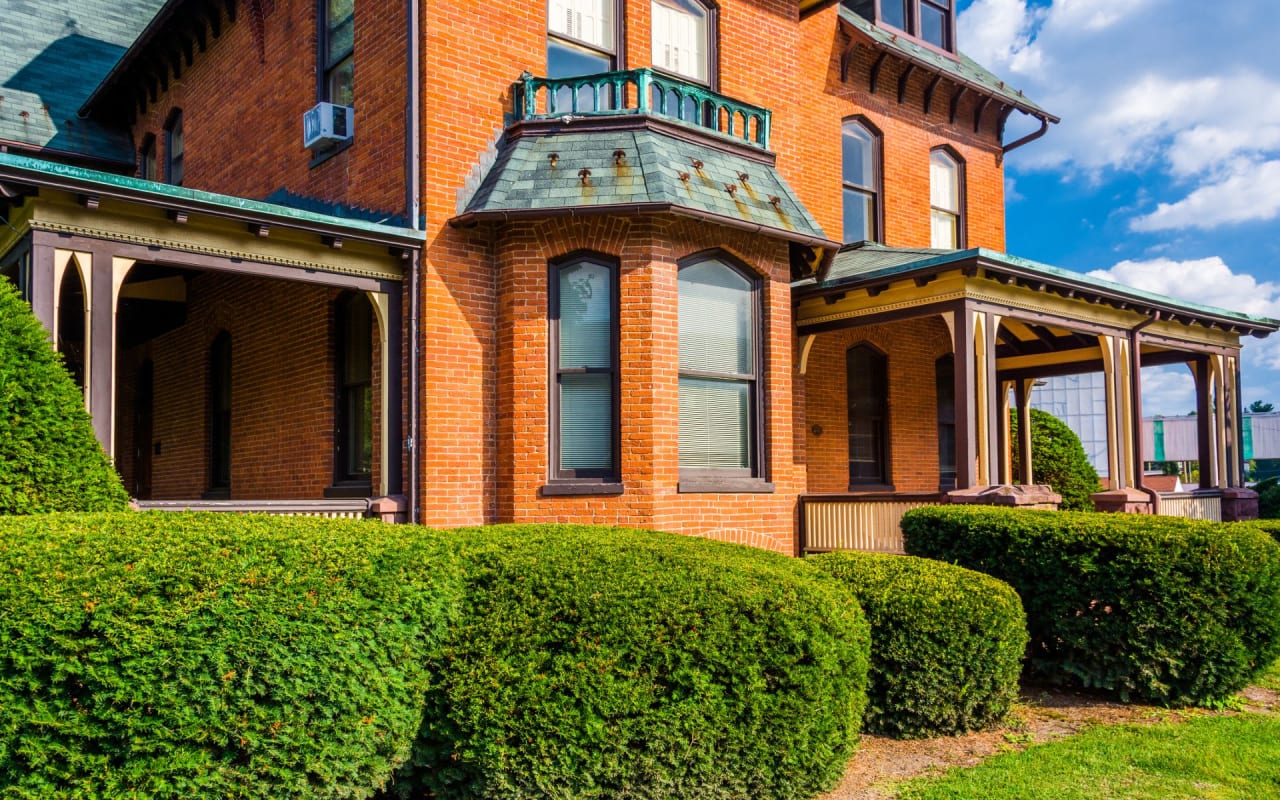
Germantown Avenue This Fall: Why the 6200 Block Is Suddenly the Most Interesting Stretch in Northwest Philly
If you have lived in Germantown for more than a couple of years, you have watched the Avenue cycle through openings and closings the way most streets cycle through seasons. Umoja House gone. The original Germantown Espresso Bar gone. Uncle Bobbie's future in question for more than a year. It made sense to assume the 6300 corridor was thinning out.
That is not what is happening. Look at the permits, the reopenings, and the fall event calendar together and a different picture emerges: the independent businesses that anchor this stretch are staying, and in most cases expanding, on the same handful of blocks. The story of Germantown Avenue in 2026 is not turnover. It is consolidation around the 6200s and 6300s, with new construction filling in the gaps.
Here is what that looks like on the ground.
The single most-watched question of the last eighteen months was where Uncle Bobbie's Coffee & Books would land. It has been at 5445 Germantown Ave. since 2017 and has, by any honest read, done as much for foot traffic on that block as any single business. In April, owner Marc Lamont Hill's team gave neighbors the answer: Uncle Bobbie's is officially staying in Germantown, moving from 5445 Germantown Ave. to a new home at 6237 Germantown Ave., near Washington Lane. The reopening is set for Fall 2026.
The move is not cosmetic. Manager Justin Moore told the Germantown Info Hub that the new location will offer more seating, more books, and more events, be fully accessible for people with mobility challenges, and improve security in a way the historically protected current building did not allow. Read that again if you own an older commercial property on the Avenue. The friction of running a modern retail business inside a protected 19th-century shell is a real cost, and it drove one of the neighborhood's most beloved businesses to relocate three blocks north.
The 6200 block is not receiving Uncle Bobbie's in isolation. It is receiving it into a stretch that already includes the Johnson House, Our House Culture Center (formerly the Lucien Crump Art Gallery), the Germantown ArtHaus in the former Swain building, and the barbershops and hairdressers still lining the block. That is the density that makes an anchor tenant work.
The other quiet return worth marking on your calendar: the Germantown Espresso Bar reopened in early February after closing its original Maplewood Mall location in 2022, this time in a renovated 300-year-old building with expanded seating, breakfast pizza, and cinnamon bun croissants. If you were mourning the old spot, the new one is a real upgrade.
| Business or site | Address | Status this fall |
|---|---|---|
| Uncle Bobbie's Coffee & Books | 6237 Germantown Ave. | Reopening Fall 2026 |
| Germantown Espresso Bar | New location, renovated 300-year-old building | Open since February 2026 |
| Germantown ArtHaus | 6228 Germantown Ave. | Programming and restoration ongoing |
| Johnson House Historic Site | 6306 Germantown Ave. | Fall concert Sept. 19 |
| Wyck | 6026 Germantown Ave. | Monthly Second Saturday workshops |
| Cliveden of the National Trust | 6401 Germantown Ave. | Free monthly tours |
Notice how tight that footprint is. If you drew a half-mile line up the Avenue from Wyck to Cliveden, it would touch every entry above.
Semiquincentennial year has translated into more programming than a normal fall on the Avenue, and most of it is walking distance from a Germantown front stoop.
Historic Germantown is a partnership of 20 historic houses, destinations, and museums in Northwest Philadelphia, sitting on ground where one of Philadelphia's Revolutionary War battles was fought and where the first-ever American protest against slavery was written. The 2026 lineup is denser than any I can remember.
A few of the fall dates worth putting on your fridge:
If you have been thinking about becoming an actual member of one of these houses rather than just walking past them, Historic Germantown is running a 2026 membership drive. A OnePass buys you into the whole consortium rather than one site.
The Historic Germantown calendar is the one bookmark I would keep updated through November.
Here is the piece the casual observer usually misses. The corridor is not just holding onto its anchors. It is quietly getting rebuilt around them.
In early January, longtime Northwest Philadelphia developer Ken Weinstein announced a new project in Germantown's Penn Knox area: a five-story, 46-unit apartment building on Germantown Avenue with more than 1,600 square feet of commercial space and 17 parking spaces. The project reflects a new wave of multifamily development in Germantown, which had seen limited attention from developers since the mid-20th century. Weinstein's own read: "The demand for housing in Germantown continues to outpace the supply so more housing, at all income levels, is needed."
Weinstein is not the only permit on the block. A few doors from where Uncle Bobbie's is reopening, permits have been issued for a four-story, mixed-use building with a cellar at 6225-27 Germantown Ave., introducing ground-floor commercial space along the Avenue with residential units above under CMX-2 zoning. The approved scope allows for 45 dwelling units, enabled through use of the green roof density bonus. A demolition permit for the existing structure was issued in January 2026, and zoning approval was granted in August 2025.
Sit with the geography a moment. Two projects, ninety-one new units combined, both on the same commercial spine, both bracketing the block Uncle Bobbie's just chose. That is not coincidence. That is developers reading the same tea leaves the coffee shop did.
The city is reading them too. Germantown is one of the corridors targeted under the city's "Ring It On! One Philly, A United Celebration" initiative, which will focus on 20 corridors across the city to draw more visitors, support small businesses, and make the commercial strips more active and inviting. The program's "activations, beautifications and celebrations" work includes expanding existing neighborhood festivals, adding new programming, and making physical improvements like street trees, lighting, benches, banners, and bike racks.
Banners and bike racks sound like small potatoes. They are not, if you have been on a corridor where they arrive and stay. They are what a city spends money on when it has decided a stretch is worth reinforcing.
A few practical takeaways for people who already own on or near the Avenue.
Your daily loop just got denser. If your muscle-memory route was Weavers Way to the current Uncle Bobbie's and back, by late fall it will make more sense to walk north instead of south. You end up passing Wyck, Johnson House, ArtHaus, and Cliveden on the same trip. That is a better Saturday than most neighborhoods offer.
The 6200s and 6300s are the block to watch. Not in a speculative sense. In a "this is where the next few years of events, programming, and construction dust will actually happen" sense. Expect scaffolding. Expect more pop-ups on side yards near the ArtHaus. Expect the coffee-shop line to migrate three blocks.
Old buildings on the Avenue carry real operating friction. Uncle Bobbie's move is the cleanest evidence of this you will find. Security gates were not allowed in the historically protected building, and the cost of break-ins added up. If you own an older commercial or mixed-use property, that is worth taking seriously before you plan a renovation.
The programming is the amenity. Median price and days-on-market are the numbers people quote about Germantown. They miss the point. What you are actually buying, when you buy a house within walking distance of this stretch of the Avenue, is a fall calendar with Jammin' in the Garden on it, a Wyck workshop with a Philadelphia chef in October, and a free Cliveden tour in November. That is the amenity. It shows up in resale eventually. It shows up in your life sooner.
I was around when the 6300 block was losing coffee shops rather than gaining them. It genuinely felt like the Avenue was drifting. What has changed in the last twelve months is not a single opening or a single grant. It is the alignment. An anchor tenant chose to stay. A beloved cafe came back. Permits went in for ninety-plus units on the same three blocks. A city program picked the corridor. And a partnership of twenty historic sites decided the 250th year was worth investing in on this specific stretch.
None of those actors coordinated. All of them made the same bet.
If you have been quietly wondering whether it was time to fix up the front of your house, refinish the stoop, or finally do something about that back kitchen you have been avoiding since you moved in, the honest answer is that the block around you is moving. It is a fair time to move with it.
When you want to talk through what any of this means for your specific house, whether you are thinking about improvements, a move up the hill, or just want a straight read on your block, The Liz Clark Team is here. Let's Meet.
Stay up to date on the latest real estate trends.

Home Appraisals Explained for Philadelphia Buyers, Sellers, and Luxury Homeowners.
A Guide to Chestnut Hill Architecture, From Stone Colonials to Modern Landmarks.
How Home Age and Market Value Shape Philadelphia Real Estate Prices.
A Clear Guide to the Home Appraisal Process for Philadelphia Buyers and Sellers.
If you’re thinking about selling your home, obsessively scrolling for a house, planning a relocation to the area, or just feel unsure where to start, we can help. Reach out for a zero-pressure 30-minute phone or video meeting to get started. We are here to listen, support, and educate so you can feel confident with your decisions in our swiftly moving market