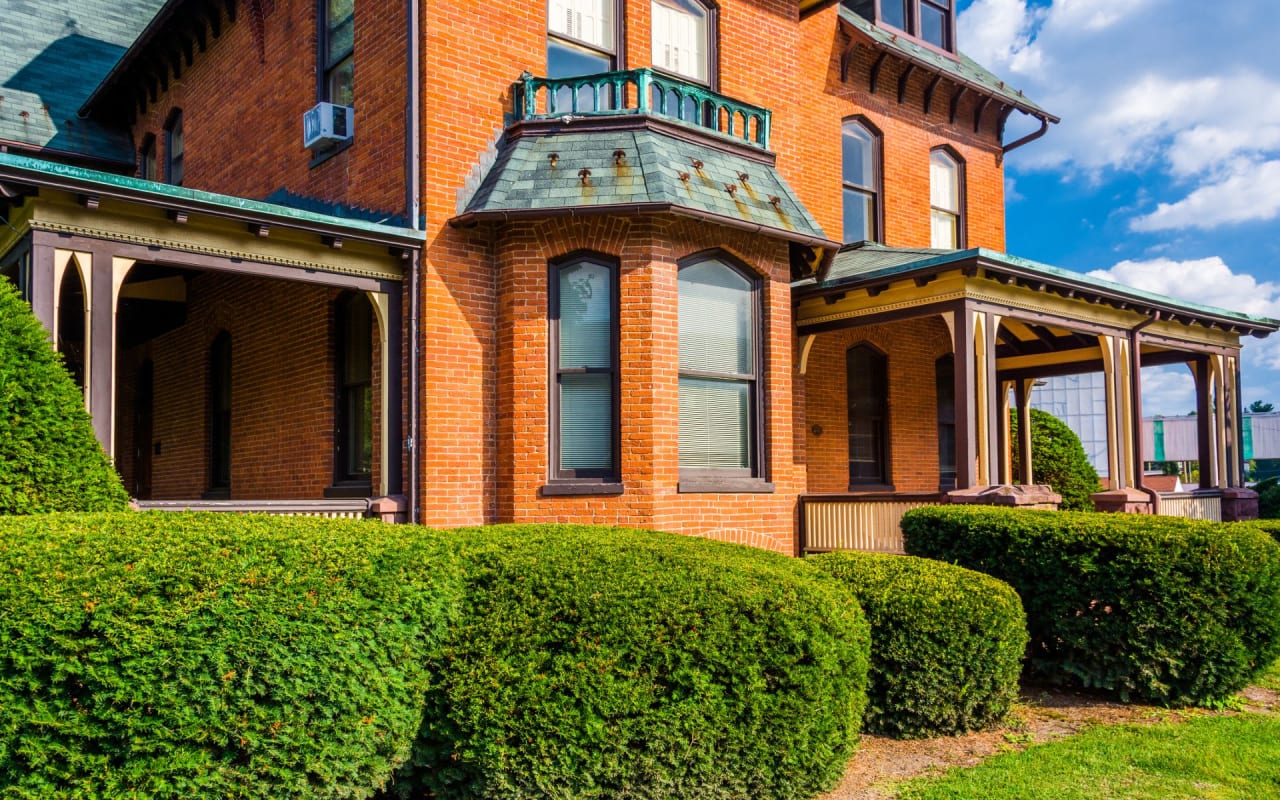
Two Point Breeze Rowhomes, Same Price, Very Different Tax Bills: What the Abatement Clock Actually Means
Stand at 20th and Wharton on a Saturday afternoon and you can watch this problem in real time. Two rowhomes, maybe three doors apart, both built inside the last decade, both listed for roughly the same number. The tax bill on the listing sheet looks almost identical too. What the listing sheet does not tell you is which decade of the abatement rules each house is actually living under, or how many years each one has left before that bill stops being small.
That gap is the thing worth understanding before you write an offer in Point Breeze right now. The neighborhood has been building new rowhomes almost continuously since the early 2010s, which means it now has a denser mix of abatement start dates, expiration dates, and rule sets than almost anywhere else in the city. A house permitted in 2018 is playing by different rules than a house permitted in 2025, even if they're standing side by side with the same brick and the same floor plan.
The City of Philadelphia says its 10-year tax abatement exempts the added value of new construction or a qualifying renovation from city and school property taxes, but only the improvement value. You always pay taxes on the land. The Flagstone guide says that, for most of the program's history, that meant a full 100 percent exemption on the building's assessed value for a flat 10 years. City Council changed that for any building permit issued on or after January 1, 2022. Permits from that date forward get a declining abatement instead, which the City of Philadelphia lists as 100 percent the first year, then stepping down roughly 10 percentage points a year until the exemption is gone.
So a Point Breeze rowhome permitted in 2019 is still living under the old flat rule, untouched for its full decade. A rowhome permitted in 2025 is automatically on the newer declining schedule from day one. Same neighborhood, same builder in some cases, completely different tax trajectory.
Here's the part that catches buyers off guard: the abatement is not tied to the person who built the house. It's tied to the property. When a home sells mid-abatement, the remaining years transfer with the deed. If a seller has 7 years left on a flat 100 percent abatement, the buyer inherits those 7 years and picks up exactly where the seller left off. The clock does not restart at closing. It also does not pause. A house with 8 years of abatement left carries real, quantifiable value that a house with 1 year left does not, even if today's tax bills on both look the same on paper. One Philadelphia-focused property data firm modeled that gap at somewhere between $30,000 and $60,000 on a typical Philly rowhouse, depending on how many years remain. That's not a rounding error. That's a number that should show up in how you compare two houses, not just how you compare two price tags.
Point Breeze makes this concrete because the construction pipeline here has barely paused. Philadelphia YIMBY has tracked a steady run of new single-family permits across the neighborhood into 2026: a two-story home on Gerritt Street built on a Philadelphia Land Bank parcel, a three-story build on Moore Street, a rowhouse on Dickinson Street, another going up on South 21st Street between two already-completed new builds. Every one of those permits landed after January 1, 2022, which means every one of those houses is automatically on the newer, declining abatement schedule, whether the buyer realizes it or not.
One recent permit at 1239 South 24th Street tells the story especially well. Once that lot is built out, the block will have no vacant parcels left at all. As of 2007, that same block had more than a dozen empty lots. That is not a slow trickle of infill. That is a neighborhood that has spent close to two decades filling itself back in, one permit at a time, which is exactly why its housing stock now spans so many different abatement generations on a single street.
Nearby on Reed Street, a pair of new rowhomes neared completion in early 2025, built with a gray heather brick chosen to blend with both the prewar houses and the newer construction already on the block. Stand on that stretch today and you're looking at three eras of Point Breeze housing at once: prewar homes paying full taxes, an earlier abatement wave that's aging toward expiration, and a newer wave just starting its declining clock. A buyer walking that block needs to know which era they're actually buying into, because the listing photo won't tell you.
A Philadelphia Inquirer report examined how the abatement shaped Point Breeze. The neighborhood was one of the clearest examples of what the original flat abatement was built to do, and what it changed about who lived there. Developer Ori Feibush built a run of new rowhomes here in the 2010s, including one on 20th Street near Wharton that Jeff Bates moved into as its first resident, drawn partly by the roof deck and partly by the significantly reduced property taxes that came with new construction.
Not everyone in the neighborhood took the deal. Mindy Isser bought a rehabbed home at 19th and Tasker several years earlier and chose to opt out of the abatement entirely. She later told the Philadelphia Inquirer why, putting it as simply as the tradeoff actually is:
"Buying a house means you pay property taxes."
Longtime shopkeeper Art Murphy, who has run a business down the street from Bates's house for decades, described the flip side of that same abatement wave to the same reporter: rapid change moving faster than many longtime residents could keep up with. Both perspectives are still true here. The abatement did what it was built to do, filling in vacant lots block by block. It also means today's buyers are choosing between houses whose tax futures were shaped by policy decisions made years apart.
None of this shows up automatically on a listing sheet, so the burden is on you, or your agent, to go find it before you fall in love with a number. A few concrete steps:
One more detail worth filing away for whenever your own abatement eventually runs out: the City of Philadelphia says its Homestead Exemption knocks $100,000 off your assessed value and saves most owner-occupants close to $1,400 a year, and that it cannot be claimed while a property is receiving an abatement. The two don't stack. The move for most owners is to file for the Homestead Exemption the moment the abatement ends, so the full tax bill doesn't land all at once with no cushion behind it.
If I buy a house with 3 years left on its abatement, do I get a discount to make up for the short runway? Not automatically. It's a point of leverage in negotiation, not an automatic price adjustment, since the seller has already benefited from most of the abatement years themselves.
Does the abatement affect what I pay at closing, or just my ongoing tax bill? Just the ongoing bill. It shows up every year afterward on your real estate tax statement.
Can I apply for an abatement myself if I buy a house that never had one? Generally no. The abatement is tied to a qualifying building permit for new construction or a substantial renovation. Buying an existing, unrenovated house that already pays full taxes doesn't create a new abatement window just because you're the new owner.
If you're comparing new construction in Point Breeze right now, or trying to figure out what a listed tax bill will actually look like in three years, this is exactly the kind of detail we run down before you make an offer, not after. The Liz Clark Team knows this neighborhood block by block, permit by permit. Let's Meet.
This article is general information, not legal, tax or financial advice. Consult a qualified professional about your situation.
Stay up to date on the latest real estate trends.

The Decisions That Set Up a Smooth Sale in Chestnut Hill, PA.
Reaching the People Most Likely to Fall for Your Chestnut Hill, PA, Home.

A Walk Down Germantown Avenue and What You'll Find Along It.
If you’re thinking about selling your home, obsessively scrolling for a house, planning a relocation to the area, or just feel unsure where to start, we can help. Reach out for a zero-pressure 30-minute phone or video meeting to get started. We are here to listen, support, and educate so you can feel confident with your decisions in our swiftly moving market